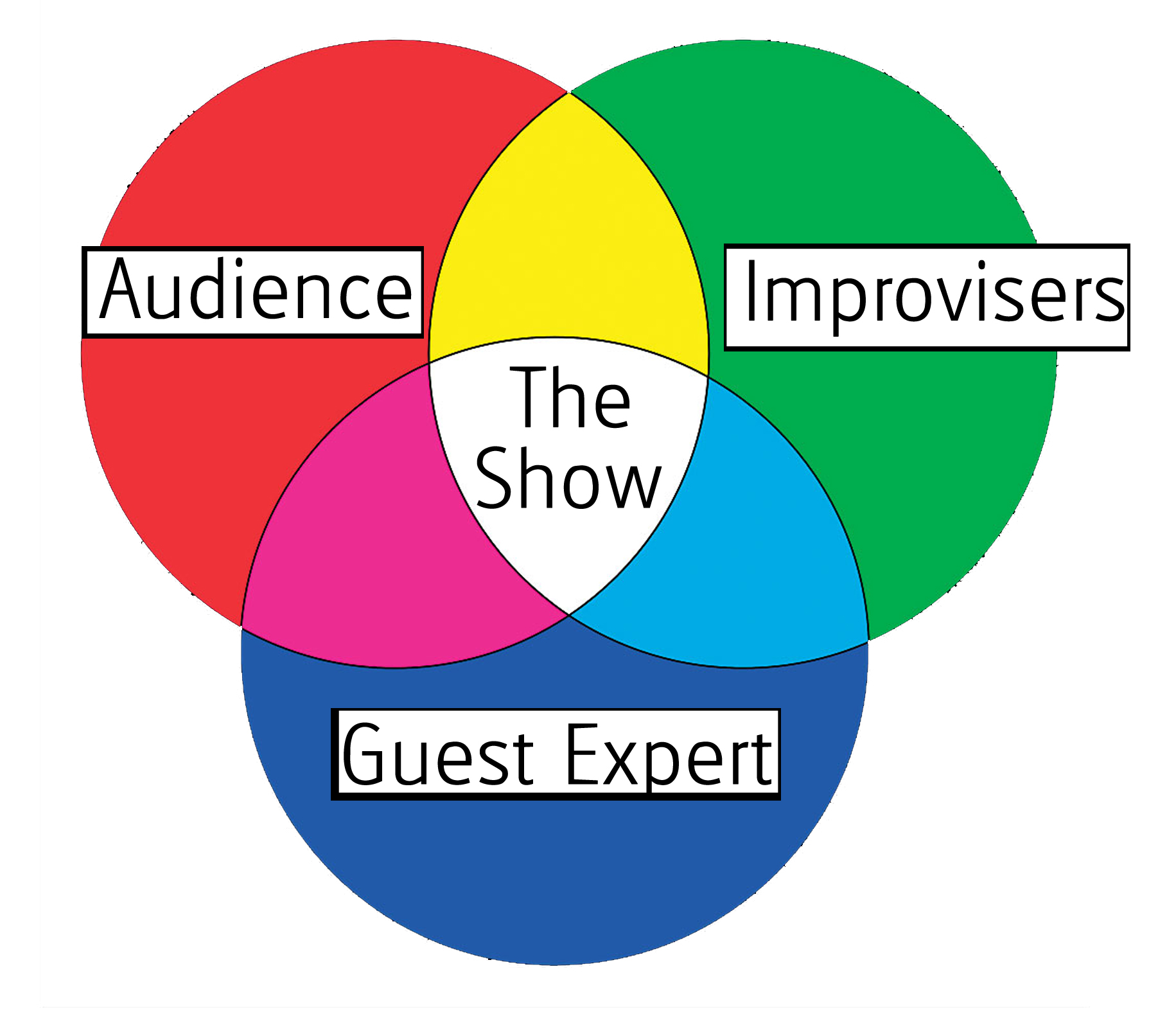
 Our show has an interesting intersection with three distinct groups: the audience, the improvisers, and the guest expert. The guest expert automatically holds authority over an issue because of their status, either through their job or the fact that they’re talking on a stage. An audience is like an information sponge, absorbing different points that resonate, but the vast majority of a presentation isn’t retained. Improvisers craft spontaneous and humorous situations while reacting to the crowd. With our show, each of those three groups have a wonderful overlap with each other, where they share and shine alike. Think of them as being similar to a Venn diagram, where they’re each distinct, but overlap with the others.
The Citizens League talks about a disconnect between policy makers and citizens. Experts often speak to us from isolated positions, either through television, newspaper quotes, or other forms of mass communication. Those ways are necessary to reach the widest amount of people, but they aren’t effective ways to have conversations about these issues. Our show gives experts the stage to talk about their ideas about the policy issue, but afterwards, they must become a member of the audience to see how the improvisers interpreted their ideas. Though they get to respond later, they still must watch passively during the show.
Improvisers are reactive performers. Nearly every inspiration for their craft comes from the audience or their fellow performers on stage. For our show, they embody elements from both the expert and the audience. At the start of the show, they remain passive by attentively listening to the interview. We prep them beforehand with a dossier of information, but overall they’re novices in the subject. However, they share an authoritative air like the expert by the sheer fact that they’re on a stage and people are listening. After the interview, through improvised narratives and relationship they’ll focus on the most interesting details and explore the issue in a unique way.
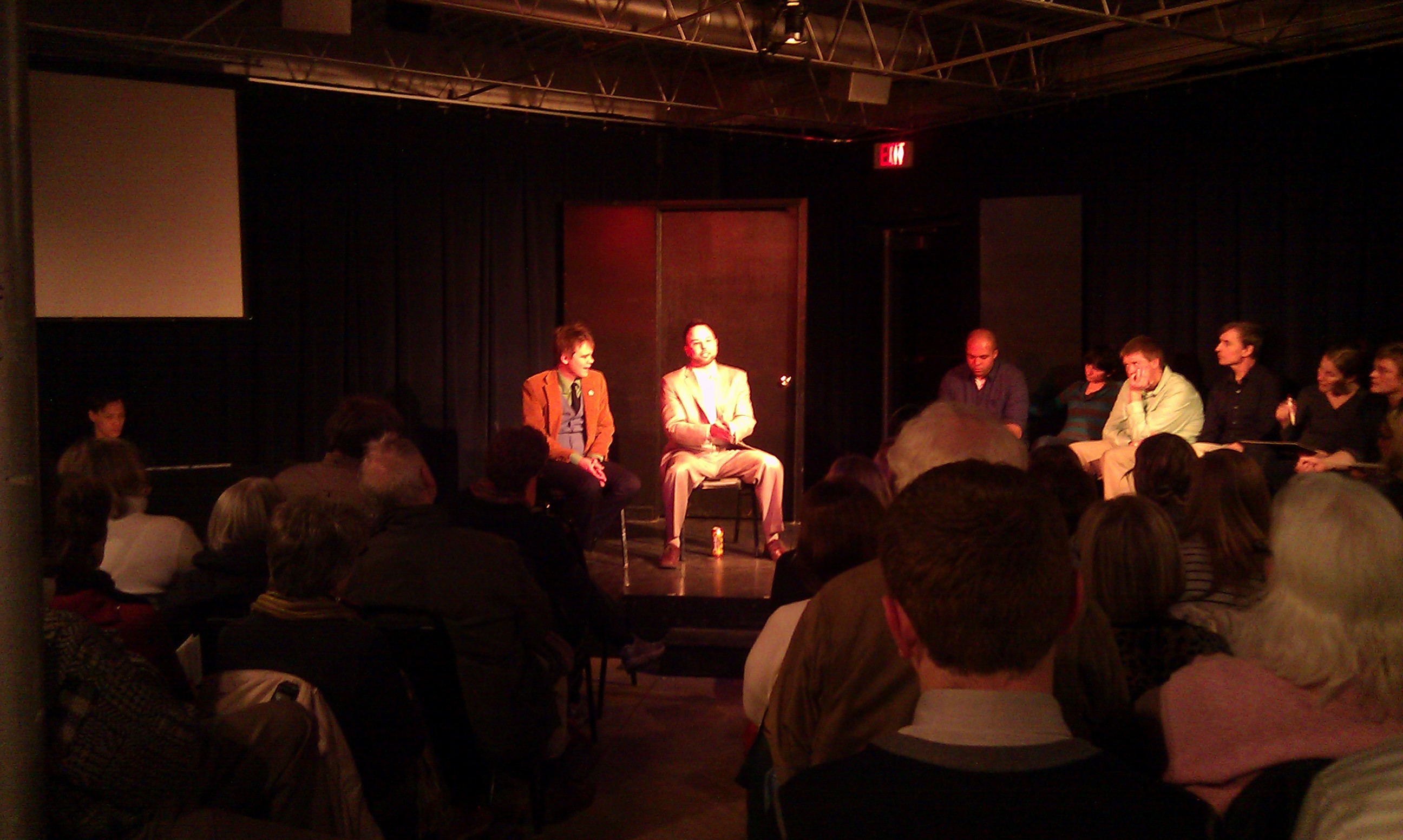 An audience usually takes a passive role at an event. They listen to what they’re told, applaud at the right times, and afterwards tell their friends some choice quotes. They don’t have a voice in the discussion of an issue and don’t get to contribute their meaningful ideas. Lectures, speeches, and debates have their place and purpose, but we wanted to turn those on their head. How can we make events like those more interactive? To that effect, we conduct polls at the beginning and end of the show to get a snapshot of the opinions in the room so that you know who is sitting next to you and to whom we’re speaking. To let their opinions be heard, we open up the second half of the show to audience. Then, it’s their chance to control the conversation and confront the issue.




 The Theater of Public Policy
Sign up for the T2P2 e-newsletter - send us your email address!