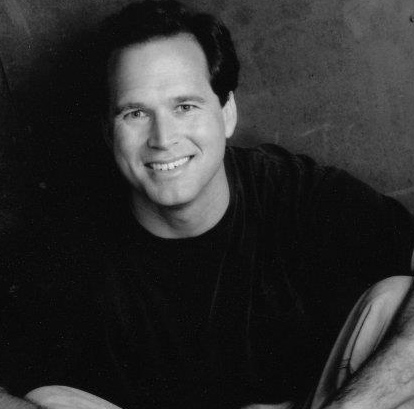
Jim Robinson – Improvisor/actor, professor at St. Kate’s University
We asked T2P2 cast member and St. Catherine University professor Jim Robinson what he was thinking about going into Thursday’s show about Education in Minnesota. Share your own thoughts using the comments section below.
I’m excited about this Thursday’s (FREE!!) show at Patrick’s Cabaret where we’ll be looking at education in Minnesota. The past, of course, is the best predictor of the future, and our previous shows on education have been very, well, educational and emotional. All of us have strong opinions about education–school, more precisely–and most of our feelings are based on reactions against our own schooling experience.
I’m a teacher and am feeling swamped by the onslaught of technology that is making the classroom into a frenetic series of sound bites; others are thrilled by the opportunities this technology affords. And while the sciences are being rightfully trumpeted, I wonder what will happen to verbal skills and composition. It seems as if very little emphasis (and money!) is being spent on written expression, and I wonder if educators will be able to stem this tide of text-speak.
Or maybe I’m just a crotchety former English teacher (I teach psychology now, training young adults how to dissect relationships and be vaguely dissatisfied). I am thrilled that the Dayton administration is focused on early childhood education—there seems to be nothing more crucial to a student’s success later in life—but I’d like to see more emphasis on making the school experience more valued for itself; the time spent in class and at school can be just as valuable as the degree a student receives. I worry (as a psychology professor) that education is becoming just another consumer product and that the friendships and memories a good, challenging education can create are being discounted.
So, please, bring your own worries to the T2P2 show on Thursday, October 18, and we’ll explore them with improvisational humor. And then go home and write about, or at least text your friends.
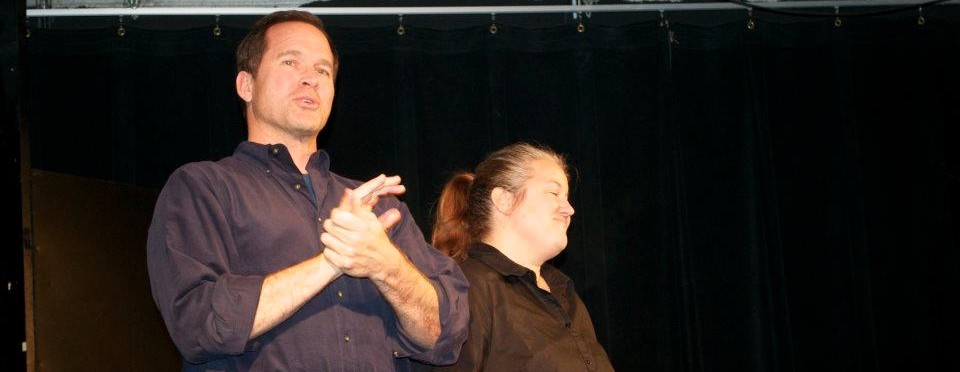
Class is now in session.
What do you think?
- What’s working in Minnesota schools today?
- What’s not working?
- Are education reforms from the past 10 years taking us in the right direction or wrong direction?
- If you were Education Commissioner for a day, what’s one thing you’d change about Minnesota schools?





 The Theater of Public Policy
From Peggy Knapp via Facebook:
“Hey there improvisers. Here’s what I am thinking about for your education show on Thursday. It is MN law that the parent has primary responsibility for educating a child. And here is the text of that law-
“120A.22 COMPULSORY INSTRUCTION.
Subdivision 1.Parental responsibility.”
This will be a great session! What worries me about education in Minnesota (and nationwide)? Mostly this: Why don’t students know how to write anymore? Seriously, semicolon rules are not that hard to learn. Nor are punctuation, grammar, and spelling! What’s the deal, elementary teachers? I know you’re not “kicking the ball down the field” on purpose; what exactly is preventing you from instilling the basics in our kids?
The teachers last night did such an eloquent job of answering that question, Curley-Dee!
You’re defining “the basics” as “students knowing how to write grammatically accurate sentences.” Well, “the basics” for this generation of students are not the same as they were back in the day. The academic curriculum now has a much different emphasis than it did thirty years ago (as it should). For example, it’s much more important for this next generation’s work force to have fluent understanding and familiarity with technology. You and I didn’t have have to learn about all of the stuff these kids do; we are on the other side of the digital divide, my friend. I’m only 26 and I’m pretty sure today’s 10-year-olds are better with computers than I will ever be.
Also, from what teachers said last night in our small group discussions, academic expectations are much higher for students today (example: Kindergartners are expected to read by the time they move up to the first grade, Dennis. FIRST GRADE. That seems insane to me.) More ground is expected to be covered by the teachers, although the length of the school year and the school day itself remain basically the same, and the amount of individualized attention each student gets is not increasing. One teacher from Anoka-Hennepin told of a 5th grade class with 36 students. Thirty six! Add to that the insane amount of class time that must be set aside for cramming, er sorry, “PREPARING” students for standardized tests… At the end of the day, teachers need to prioritize and manage their curriculum as best as they can. And since computers have auto-correct for punctuation, grammar and spelling, it might be considered an inefficient use of class time to dwell on those areas.
I’m not saying writing isn’t important, because it’s a basic tool of communication. And students with grammatical and oratorical savvy will have a competitive edge when applying for post-secondary education. This has always been the case, and always will be the case. But if a teacher has just eighty minutes to teach 36 kids “the basics”, I argue that 2012’s “basics” are a lot different than we might think.
Thanks again to everyone who made it out to the show last night! And a special thanks to our guest Charlene Briner for her warm and delightful chat with Tane.
Charlene’s comment about silver bullets really stuck with me for the evening. When it comes to education, we really do look for the quick fixes and easy solutions. Spitballing solutions (or more accurately, the “who can we blame for our kids’ scores not being higher game”) really sums up the general attitude many people have towards our public school system.
I will say, as a 26 year old who vividly remembers the terrifying days of standardized testing at my own school, I am so relieved to hear that even the adults as high up on the Education Administrative Ladder as Charlene ALSO despise these tests, and that these tests are NOT merely administered as punishment for kids like me. It’s simultaneously disheartening to hear that these students’ scores are more important to their’ future than they were when ten years ago.